

Sustainable and Integrated Transport for Ullswater
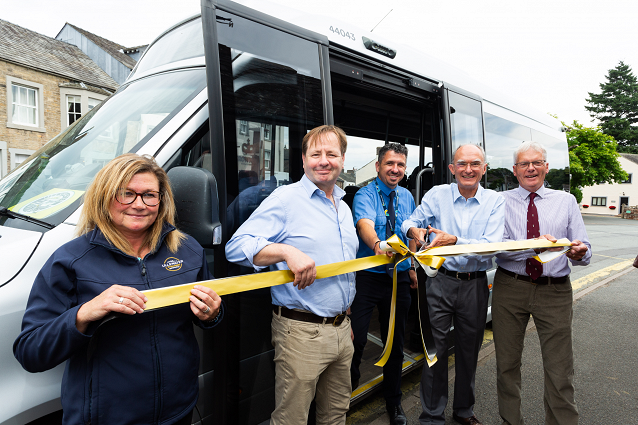
Remove SITU bus opening.
Category: Transport
Ullswater is one of the most scenic valleys in the Lake District and attracts a large number of visitors each year. While the local population is just 3,000 people, Ullswater can accommodate up to 10,000 visitors overnight in high season but the vast majority (80%) of visitors come for the day, mostly travelling by private car. In efforts to reduce congestion on the minor roads through the valley and limit the climate impact of visitors, residents from the Ullswater parishes formed the Sustainable and Integrated Transport for Ullswater (SITU) group which is now a recognised charity. SITU works with local communities, businesses, farmers, land owners, local authorities, and relevant agencies to introduce sustainable, affordable, and reliable, integrated transport alternatives to car travel throughout the valley which benefit visitors, residents, and local businesses alike. SITU’s vision is to create a valley in which visitors and residents opt to utilise sustainable forms of transport including bike, bus, boat, or boot.
Since forming, SITU has implemented two flagship projects as part of their sustainable and integrated travel initiative. The first initiative is the Eamont Way, a 5.5 mile footpath linking Penrith town centre with Pooley Bridge. The route, which was developed through a collaboration between SITU, the Friends of Ullswater Way, and the Lake District National Park with support from a wide range of stakeholders, offers visitors an on-foot alternative to motorised transport for those visitors arriving to Penrith by train. At Pooley Bridge, visitors can opt to continue their travel on foot, by bus, or by boat using the Ullswater Steamer service, connecting visitors to locations such as Howtown, Glenridding and Aira Force without the need for a car.
The second initiative is the Ullswater Bus Service, a partnership with Stagecoach which resulted in the establishment of community-designed affordable bus routes linking key destinations and attractions with accommodation hubs in Ullswater. The developed model is community-led and operates on a not-for-profit basis with vehicle provision and operations provided by Stagecoach and funding sources from ticket income, grants, and local business pledges. Since its introduction in 2023, the service has seen a gradual extension on the basis of learning and piloting conducted in the previous year.
Where
Ullswater.
What are you most proud of?
As with any community project, turning ideas into actionable and sustainable initiatives which operate within the different constraints (resource and otherwise) placed upon the group can be extremely challenging. SITU has not only managed to think of transport solutions which offer viable and sustainable alternatives to the private car for both visitors and local residents but has been able to make these ideas a reality. In doing so, we have facilitated real behaviour change amongst visitors and local residents which has ultimately led to us reducing traffic congestion throughout the valley. Throughout, we have taken a step-by-step approach, starting with a set of goals and smaller initiatives and using these as building blocks to expand and develop the project. This approach has allowed us to slowly expand the different transport options we have been able to offer over time, but also to take the learning from previous years or projects and feed this into the next stage, helping to ensure the sustainability of the project into the long-term. We are extremely proud of our ability to turn ideas into actions and the collaborative efforts from our community and partners which underpin these achievements.
How did you get people involved?
SITU has grown organically as the projects have moved from the initial idea stage to the planning and delivery stages. The group was first established in 2020 after Matterdale Parish Council received a letter highlighting concerns about traffic congestion in different parts of the Lake District. In response to this, the parish council initially put together a working group of four councillors to brainstorm the issue and how it could be addressed. However, it immediately became apparent that, to address the issue successfully, a more coordinated effort across the valley was required. Consequently, other parish councils in the Ullswater valley were contacted and a group was formed with representatives from all parish councils in the area. As more concrete ideas started to be established, SITU was expanded to include residents with the different skills and experience required to make the project a reality. In turn, when moving towards delivering the different projects, connections were made with authorities and organisations who could help make this happen, including the Lake District National Park, the Council, and local businesses.
What difference did the project make?
Since its opening in April 2023, the Eamont Way has proved popular and has seen an average footfall of 500 walkers per month over the past year from both locals and visitors alike. The connection it provides between Penrith town centre and Pooley Bridge has provided economic benefits to local businesses positioned along the route, but also further afield with visitors able to continue by boat to other locations in the Ullswater valley, such as Glenridding. Furthermore, the existence of the footpath enables visitors to travel by rail to Penrith, helping to reduce the number of cars in the valley. Critically, the Eamont Way project shows that through community collaboration and integration, sustainable travel both within the Ullswater valley, and in other rural areas, is possible.
The Ullswater Bus Service has seen continuous expansion of its services and increasing popularity since its launch in 2023. In its first year, the service carried 1,157 passengers operating at weekends and bank holidays from July to October. In 2024, the UB2 bus route was consolidated by Stagecoach into the 509 route connecting Penrith and Keswick with Ullswater and Matterdale. The UB1 and UB3 routes were consolidated into the UB1 and this operated 4 times per day between Aira Force and Howtown, a route which serves seven large holiday parks as well as communities previously not served by public transport. Across these two routes, the service carried 9,382 passengers in 2024, saving approximately 1,400 car journeys through the valley. Of these service users, 15% were local residents, demonstrating the benefit of this service to both visitors and locals in the Ullswater valley. In 2025, the 509 route has been adopted commercially by Stagecoach and the UB1 route has been extended to operate daily in July, August and May half-term as well as on weekends and bank holidays. In addition, the UB1 service is offering free child fares to all U12s to help offset the increase in the government fare cap from £2 to £3 thereby supporting families and encouraging their use of the bus. As a result, the service has helped to create an accessible transport alternative to car travel, successfully reducing traffic congestion on popular in-roads into the valley, in turn decreasing emissions and improving the visitor experience.
What do you wish you had known at the start?
Given the complexity of the different transport projects SITU has worked upon, a lot of time and energy has been invested into researching the projects, including what has been done previously, who needs to be involved, and what is required to implement each project. In addition, each project has required the group to build networks and establish relationships with other organisations and local authorities who have responsibility for core aspects of the project. Knowing from the outset which stakeholders need to be involved and having the right contacts can help to speed up this process and ensure the right people are involved from the outset. A key learning has also been that any project which is trying to implement a behaviour change has to have the people it is designed to influence on board. This means working collaboratively with local residents, businesses, and other organisations to include them in the vision and help to make it a reality.
What do you hope for the future of your project?
SITU hopes that its achievements might serve as a model of how car-free tourism can be achieved in rural areas by providing better ways to welcome visitors, rather than restricting visitor numbers.
Between now and 2037, SITU hopes to support:
- More visitors arriving via rail
- Safe, easy and cost-effective travel from Penrith into the Ullswater valley by modes such as bicycle, eCar, eBus, or tram
- Safe pedestrian and cycle routes into the valley
- Hubs where visitors can leave their cars/buses and connect with more sustainable transport developed in collaboration with the local community and authorities
- A variety of affordable and convenient public transport options in the Ullswater valley
- Public transport options which are better suited to narrow roads
- Enhanced use of alternative transport solutions (e.g., public transport or lift shares) by residents in the valley
- The development of Ullswater as a flagship for local sustainable and integrated transport schemes
To achieve these aims, SITU is currently working on a variety of additional projects including: establishing a network of family-friendly cycling routes from Penrith into and around the valley, a park & ride scheme, and a valley-wide e-bike hire scheme. The group is also working with Ullswater Steamers to consider how to increase the use of the lake itself as a transport corridor with better connections between the major settlements, holiday parks, and attractions.
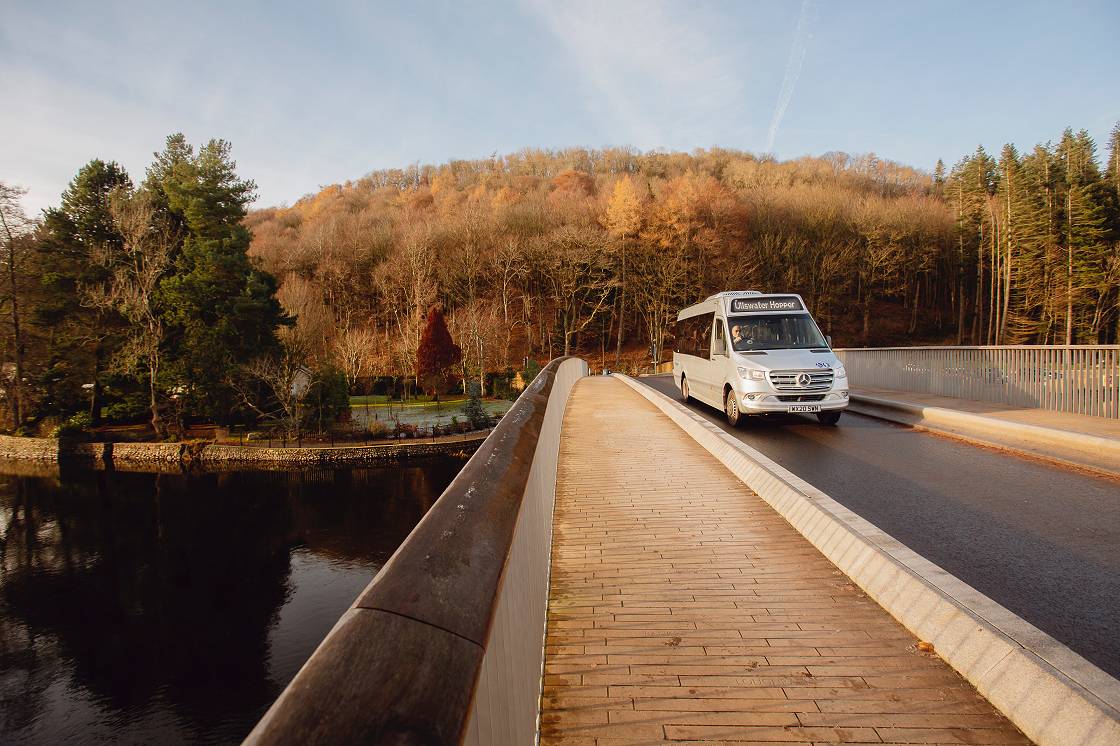
SITU bus.