

I Get Around
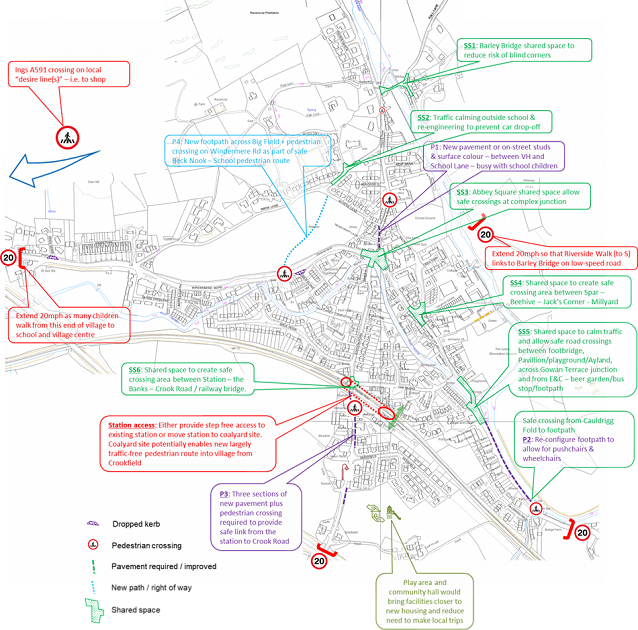
I Get Around Map.
Category: Other
The Sustainability and Energy Network in Staveley (SENS) is a group which aims to bring together different initiatives in the village of Staveley and the wider Kentmere Valley (including the parishes of Staveley, Ings, and Kentmere) which promote sustainability in the area. The group undertakes projects which seek to raise awareness of and/or mitigate the effects of climate change, including green transport initiatives and repair cafés.
Following concerns that residents of the three civil parishes may be experiencing difficulties getting around their local area, both travelling within and between the three Civil Parishes, a group of SENS members and local residents launched “I Get Around”, a questionnaire survey which sought to understand both the nature of the problems residents were facing in getting around, but also how they felt these problems could be addressed. To ensure representative and high-quality data was obtained, care was taken to design inclusive questions and open questions. The order and number of questions, as well as incentives offered for completing the survey, were also carefully chosen to encourage participation.
The survey received a total of 62 responses from a wide range of ages. The core issues and solutions highlighted as part of this survey have enabled four potential projects to be identified by the project team which are specifically tailored towards addressing the issues identified by the local community. It is hoped that these project ideas can be used to provide direction and inspiration to the organisations or local authorities with the power and resources to make these a reality.
The I Get Around project report can be viewed here.
Where
Staveley, Ings, and Kentmere.
What are you most proud of?
One of the key achievements of the project was that it incorporated the views of a broad cross-section of the community and helped to ensure that the voices of people who do not always have the opportunity to be included were heard.
As a result, the survey has been able to provide a representative picture of the barriers, both physical and social, residents face getting around and allowed solutions to be identified which should benefit all the community.
Moreover, through consulting the community on both the issues they face and their possible solutions, the survey has been able to take specific problems which exist in the community and create a broader framework for action which could target and eliminate these barriers to accessing local services.
Ultimately, through building a solid evidence-base of need, the results of the survey help to validate discussions around solutions for improving the accessibility of the area with the organisations and groups that have the power to make these happen.
How did you get people involved?
To maximise the reach of the questionnaire both paper-based and online versions were made available with most respondents (43 people) opting to complete the survey online. Links to the online versions of the survey were distributed via advertisements in the community newsletter, as well as the local primary school’s “weekly round-up” and community Facebook pages. Paper-based versions of the survey were made available on counters at the local pharmacy and were given out at Warm Spaces and Repair Café events in the community. Where preferred, residents at Warm Spaces and Repair Café events could also choose to complete the survey via a face-to-face interview.
What difference did the project make?
Through carefully considering the design and distribution of the “I Get Around” questionnaire, the project has been able to gather representative data on the problems facing residents of the parish getting around their local area and how they would like to see these problems addressed.
Moreover, through using the data to identify projects which may resolve the issues identified, the team are in a position to catalyse action by the community groups, organisations, or local authorities with the power to implement these projects and improve the wellbeing and inclusivity of their local community as a result.
More broadly, the survey shows that is possible to generate representative data and include all of the community in discussions about the issues they are facing and how they wish to see these addressed.
Furthermore, it demonstrates the value of collecting this data in devising and incentivising projects which can enhance the wellbeing of residents in an area.
What do you wish you had known at the start?
If the survey was to be designed again, a clearer picture of the boundaries of the area the survey was hoping to cover would be generated and stakeholders would be included much earlier in the process to help with co-producing questions.
What do you hope for the future of your project?
It is hoped that this survey will give people and organisations in the community the vision of what is possible and needed in the area and inspire moves towards making this a reality.
Specifically, the group hopes that each of the project ideas developed off the back of the findings of this survey will gain a lead organisation and steps will be taken towards their delivery such that, in the future, all local residents will be able to get around easily and access the community activities and services they need.
In addition, the group would like to inspire other community groups and organisations to run their own surveys in their own communities and for the issues and solutions identified as part of these to be shared between different parishes and groups.